Forward vs Reverse Proxy - A Complete Guide
Exposing your servers directly to hackers? Fix in 2 minutes with proxies.

Hello Everyone
Welcome to your AKVAverse, I’m Abhishek Veeramalla, aka the AKVAman, your guide for Cloud, DevOps, and AI.
In this newsletter we will delves into the critical roles of forward and reverse proxies in securing and scaling infrastructure. Here we address common problems like direct server exposure and uncontrolled outbound traffic, explaining how proxies act as essential intermediaries and also talked about Nginx as a powerful tool for implementing both forward and reverse proxies, offering practical guidance and a quick decision guide to help you all choose the right proxy for your specific needs.
The Problems You are Facing Daily
Imagine your web app or API out in the open on the internet with no protection. Hackers can easily scan for weak spots, DDoS attacks can crash it and slow everything down, adding more servers gets messy to manage, and attackers can target each server’s IP address directly.
On the flip side, think about your development teams or automated systems accessing the internet without any control. No one tracks what they do, security rules are not enforced, bandwidth is wasted on downloading the same files repeatedly, and this lack of filtering creates risks for compliance with company or legal policies.
These are real challenges faced by DevOps teams running Kubernetes clusters, AWS load balancers, or traditional on-prem servers. Without proxies that provide protection and control, your security weakens, performance drops, and managing everything becomes chaotic and complicated.
The Solutions
Proxies are the intelligent traffic routers. A reverse proxy acts as a gatekeeper, positioned in front of your servers to manage all incoming traffic. It handles crucial tasks such as:
TLS Termination: Decrypting incoming HTTPS traffic, relieving backend servers of this processing burden.
Load Balancing: Distributing traffic across multiple backend servers to ensure optimal performance and availability.
Caching: Storing frequently accessed content to reduce server load and improve response times.
Rate Limiting: Preventing abuse by limiting the number of requests from specific clients or IP addresses.
Hiding Origin Servers: Masking the actual IP addresses of your backend servers makes it harder for attackers to target them directly.
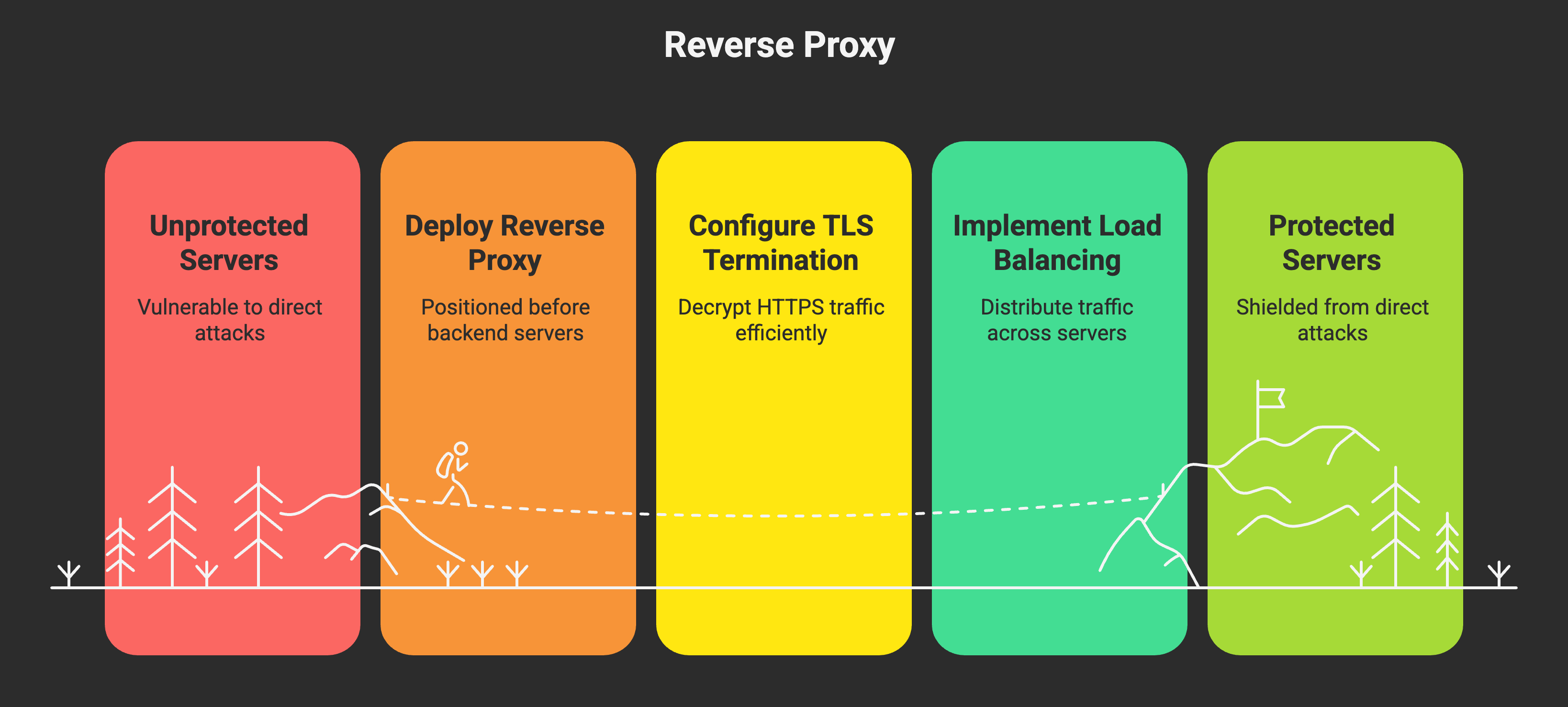
Think of a reverse proxy as a bouncer for your applications, carefully screening and managing who gets access.
A forward proxy, on the other hand, focuses on controlling outbound traffic from clients within your network. It provides features like:
Enforcing Browsing Policies: Restricting access to specific websites or categories of content.
Logging All Requests: Tracking all outbound traffic for auditing and security purposes.
Masking Client IPs: Hiding the internal IP addresses of clients, providing anonymity and security.
Caching Common Fetches: Storing frequently downloaded content to save bandwidth and improve performance.
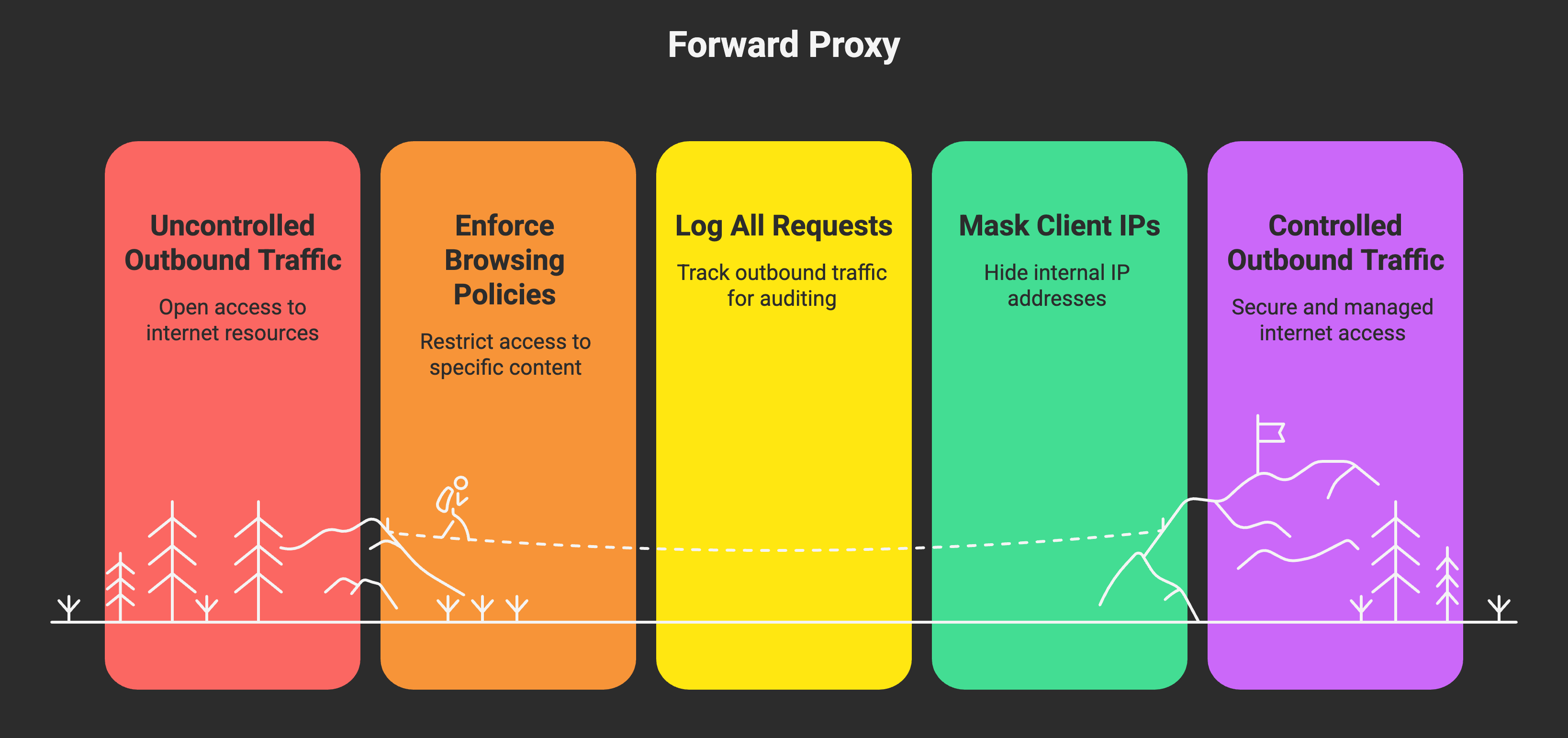
A forward proxy is ideal for corporate environments where you need to enforce internet usage policies or for build agents that need controlled access to external repositories.
Why NGINX Rules This Game
NGINX is a leading choice for both forward and reverse proxy implementations, thanks to its exceptional performance, event-driven architecture, and straightforward configuration
As a proxy, NGINX shines. You can easily configure it using upstream blocks to define your backend servers, proxy_pass directives to route traffic, and directives like proxy_cache to cache static assets or limit_req to implement rate limiting. NGINX efficiently offloads TLS encryption, compresses data using gzip, and passes the real client IP address to your applications using the X-Forwarded-For header.
For forward proxy functionality, NGINX can be extended with modules like proxy_connect. While basic, it is effective for controlled environments. However, for more advanced policy enforcement, Squid might be a better choice.
Whether you are managing microservices or a monolithic application, deploying NGINX via Docker or EKS (Elastic Kubernetes Service) makes it easy to integrate into your existing infrastructure.
Pro Tips
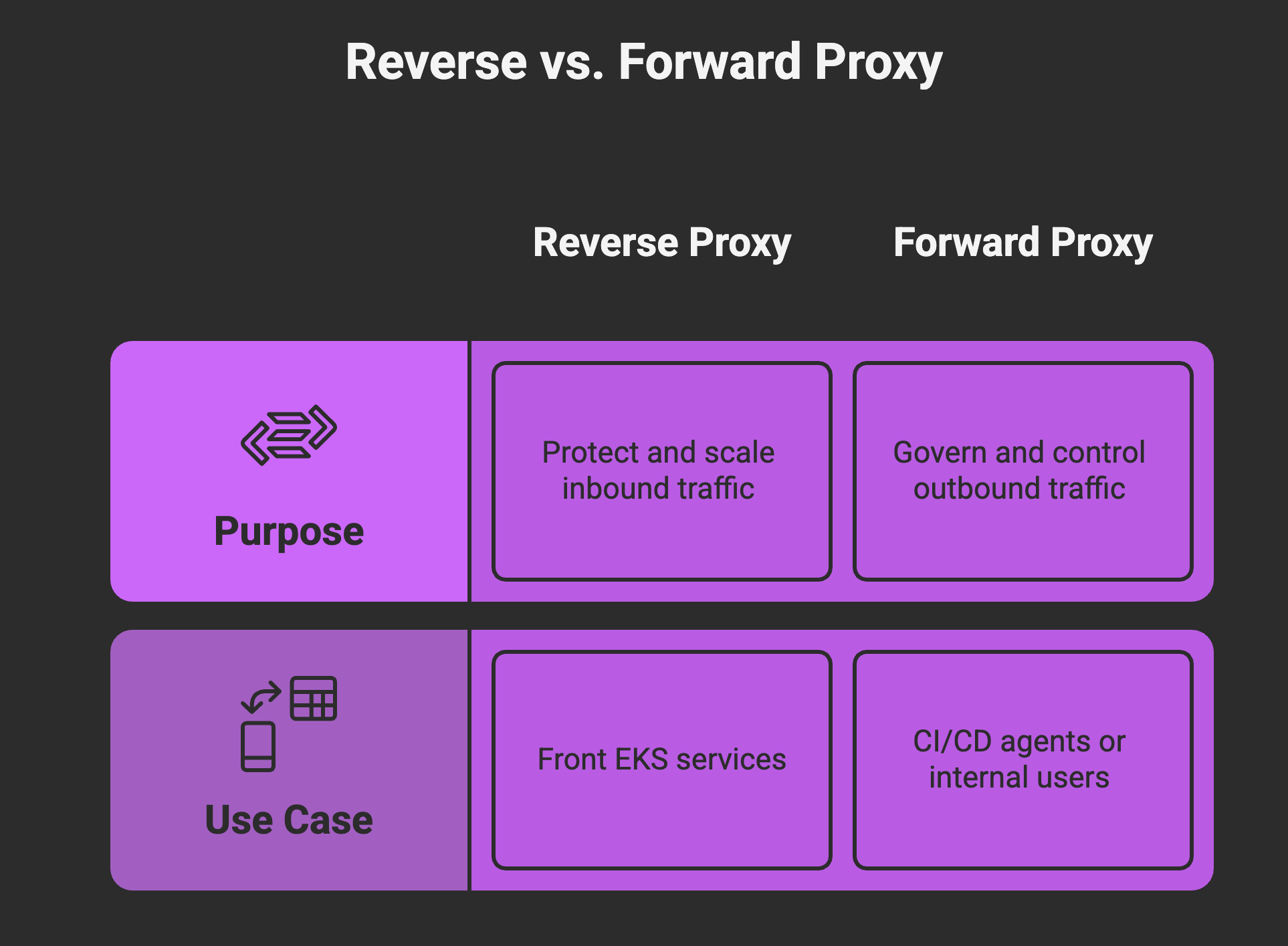
Choose a reverse proxy when you need to protect and scale your inbound application traffic. For example, use it to front your EKS services.
Choose a forward proxy when you need to govern and control outbound traffic from your network. This is useful for CI/CD agents or internal users.
Until next time, keep building, keep experimenting, and keep exploring your AKVAverse. 💙
Abhishek Veeramalla, aka the AKVAman
Simple explanation
Very useful